
A2–C1 · Ages 10+ · 30 mins · Word classes
Would you dare to ruin a course book? I suppose that depends on the student. Don’t worry this can be done with authentic newspaper articles, course book reading, listening scripts or anything you want to take class. Just make sure they don’t do it with their class reports before they give them to their parents!
Run it in 5 steps
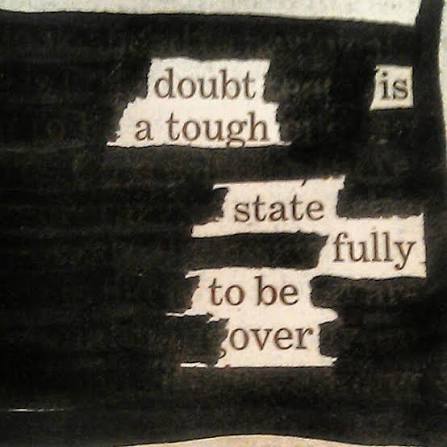
- Show an example: first the original text, then the blackout poem. Ask what changed.
- Learners read the article text for meaning and answer two quick questions with a partner.
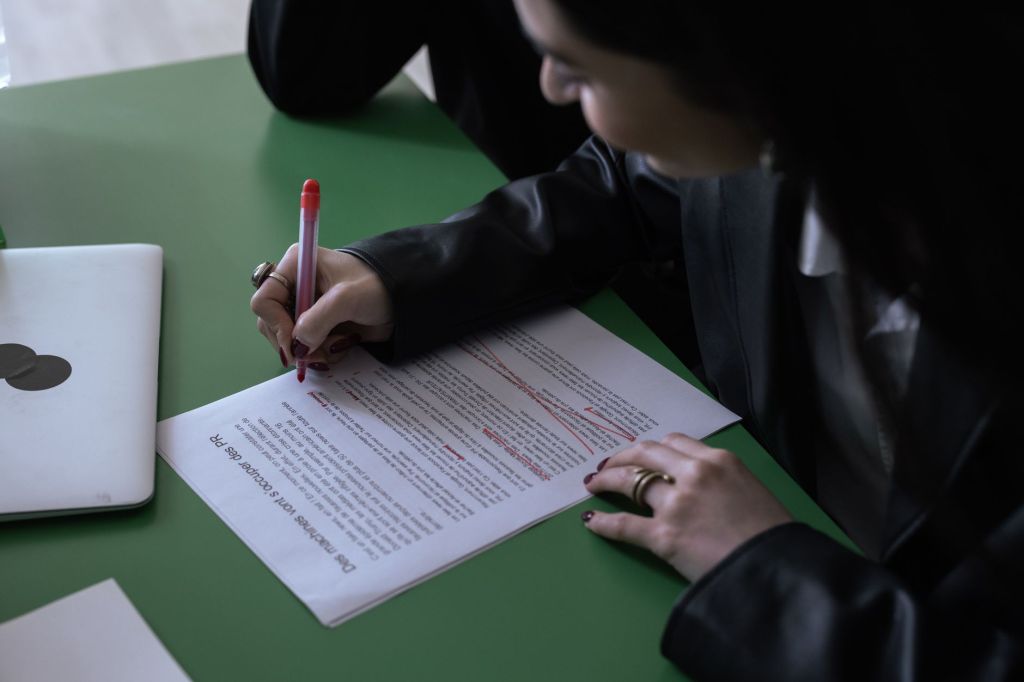
- In pencil, they lightly circle 15–20 words or short phrases that jump out at them.
- They choose some of those words to make a poem, keeping them in their original order.
- They box their words in pen, black out the rest, add a title, and read their poem aloud straight from the page.
Model poem
From a science text about octopuses
three hearts
and blue blood,
escaped
at night,
remembered the faces
of people who were kind.
Alone,
the dark ocean,
quietly learning
the world.
Go deeper
Why it works. In blackout poetry, nobody faces a blank page. Every word a learner needs is already there, spelled correctly. Their whole job is choosing the words that have some link.
To make a poem, learners have to notice which words can follow which, where a chunk starts and ends, and how a sentence can be cut and still make sense. That’s grammar awareness without a grammar lesson and it is rebellious!
It also changes how learners see ordinary English. A text full of facts about octopuses becomes a poem about loneliness. The artist Tom Phillips spent decades doing this to a Victorian novel in A Humument, and Austin Kleon made it popular with newspapers in Newspaper Blackout (2010).
Where it fits. As a second task with any coursebook reading text, after the comprehension work. Science, nature and news topics work especially well. It also makes a quiet, focused activity after a lively one, and a natural link with art lessons.
Adapting it. For younger learners, use a short text in big print and pre-circle 25 words to choose from. Teens can work with texts they recognise, like school rules or a product description, and illustrate around their kept words. With adults, try newspapers or terms and conditions, then talk about how the tone changed.
Extending it. Photocopy last unit’s reading text for a blackout revision lesson. Or move on to lifted poetry, where the words are free to move.
Level up: one text, two poems
Give learners two copies of the same text and ask for two blackout poems with opposite feelings: one hopeful and one sad, or one funny and one serious. To do it, they have to read the text much more closely and think hard about how the words they keep shape the tone. It works at B1+.
- Give each learner two copies of the text.
- On the first copy, they find a hopeful poem. On the second, a sad one.
- Same rule as before: the words stay in order and the poem stays on the page.
- Partners read both poems and say which words changed the feeling most.
- Discuss: how can the same words tell two different stories?
The Amazing Octopus (the hopeful version)
An octopus
can change
in less than a second.
Intelligent,
escaped
at night
to build a small home,
curious,
learning about the world.
Put it next to the sad version in the model poem above. The text is the same; only the choices are different. This is a great way into talking about tone with teens and adults.
Worksheets coming soon!

